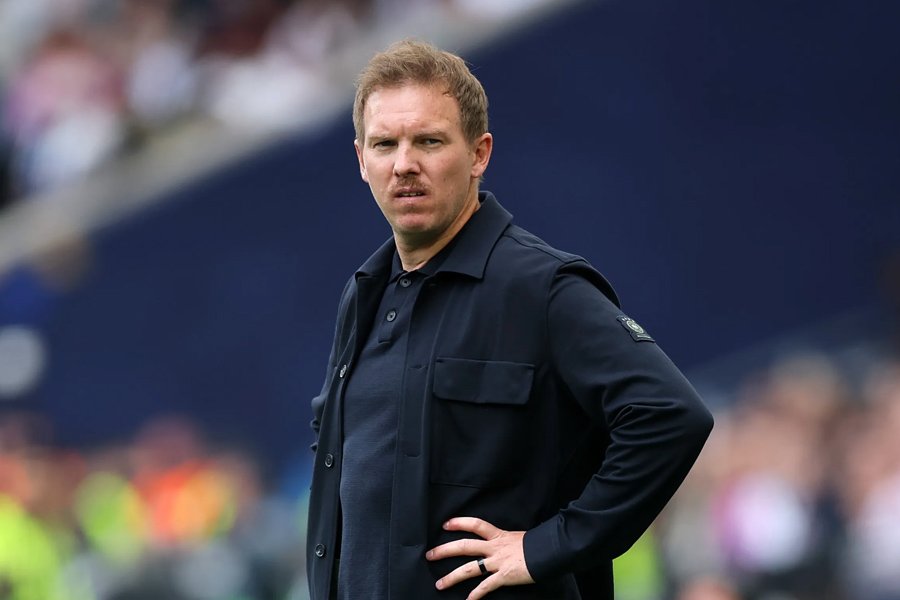
A fresh chapter that smells of thunder and chalk
I have followed coaches for years, but few have changed the sound of the game the way Julian Nagelsmann has. Where many managers arrive with a playbook, he arrives with a laboratory. His tenure with the national side has been equal parts architectonics and improvisation. The pitch is his score sheet. Players are instruments. Tactics become music that can swell and cut in the same breath.
There is a blunt honesty to his methods. He will press until the opponent makes a note of panic. He will rotate positions until opponents read a different song from minute to minute. To witness a Nagelsmann team is to watch a jazz band that rehearsed classical fugues. You never quite know where the melody will land, but when it does land, it lands convincingly.
The invisible scaffolding behind the spectacle
Beyond the formations and the press is an infrastructure that does not show up on the matchday broadcast. I want to draw attention to the quiet architecture that underpins his visible genius. This is data management. It is individualized load planning. It is psychology delivered like micro lessons. He has turned training sessions into experiments. Small variables are altered and observed. The results are fed back into the plan.
This approach is not sterile. It is human. He treats players not as cogs but as compound instruments. One player may be asked to sprint in order to trigger a defensive reaction. Another will be retrained to start matches with a different timing so the entire tempo of the team shifts. He calibrates minute things so the grand things behave as desired. The change is incremental, invisible to most fans, but profound when summed over a season.
Managing talent as if cultivating a garden
Talent development under his watch looks less like planting and more like grafting. Young players are not merely introduced. They are grafted onto systems where they can flourish and then pruned so that the whole remains healthy. Under his stewardship the national setup has become a nursery that does not demand immediate blooms. It demands resilience.
This is why the handling of injured stars matters. When a key attacker was struck down in a high profile club tournament last year, the reaction was not theatrical. It was clinical and human. The attempt was to find the balance between protecting a person and protecting a project. I think that posture tells you everything you need to know about his priorities. He will push for competitive excellence while hedging the long term.
Tactical experiments I have seen and the risks embedded within
He is not shy about experimentation. I have watched matches where he inverted full backs and asked midfielders to play asymmetrical roles. I have seen press traps set like snares and counterattacks launched as if from a script. The danger is obvious. Risky tactics require buy in and trust. When it works, it can dismantle superior teams. When it fails, the team can be exposed. That duality is part of his DNA. He embraces it.
His handling of goalkeeper selection has been a particularly delicate dance. Choosing security versus form is a dilemma he navigates publicly and privately. There is a goalkeeper who has been a talisman for certain supporters. There is form and fitness which at times do not align. As a coach I admire the courage it takes to stick with a player for their psychological value while also juggling the pragmatic demands of winning.
Leadership beyond the whiteboard
Nagelsmann’s charisma is quiet. He does not command with volume. He persuades with logic and with a visible clarity of intent. Players speak of clarity more than charisma. That tells me his strength is not in theatrical inspiration. It is in the conviction of his plans. He builds consensus without sacrificing authority.
He also understands the optics of modern coaching. Media cycles are shorter. Mistakes are amplified. He has adopted a posture of controlled transparency. He will explain without overexposing. He will own missteps and move forward. That has the beneficial byproduct of deflating the hysteria that surrounds elite football.
The cultural imprint he is leaving
If you want to spot his influence, look at coaching curriculums at youth centers. You will notice a tilt toward multi positional training. You will find analytics introduced in coaching courses. The game is becoming less about fixed roles and more about movement patterns. That is his imprint. It is subtle and systemic, like wind altering the direction of saplings over time.
He also brings a different emotional grammar to leadership. The old model of stern disciplinarian is being supplemented by coaches who can be meticulous scientists and empathetic leaders. This hybrid has become more acceptable in elite football, and I think he has helped accelerate that shift.
Club whispers and national responsibilities
There will always be club whispers. They are an industry noise. A national coach who succeeds will attract interest from clubs. That is inevitable. He now holds responsibility to a nation and to a project that extends over years. That commitment changes the calculus for clubs and for himself. He must now balance the short timelines of club calendars with the long arcs of national preparation.
The human ledger that matters most
I track victories and trophies. I also track the human ledger. How many players leave his charge better than when they arrived? How many young talents gain the composure to perform on great stages? Those metrics are harder to quantify, but equally valuable. The mark of a coach who truly reshapes a football culture is not only measured in silverware. It is measured in the persistent improvement of the people within that system.
FAQ
How does Julian Nagelsmann approach player injuries and recovery?
He blends medical caution with competitive urgency. Recovery is individualized. Players are not fast tracked for headlines. They are calibrated back into training with micro goals that rebuild confidence as well as fitness. The aim is long term availability rather than short term spectacle.
Will his tactical risks backfire at major tournaments?
Risk is inherent to innovation. Sometimes experiments fail. That said his teams are drilled to adapt. The real question is not whether risks exist. It is whether the squad has the mental flexibility to absorb a failed experiment and reset within ninety minutes. He works to build that resilience.
Does he favor youth over experience?
He values both in different measures. Youth provides energy and new patterns. Experience supplies stability and game management. He tends to use youth as a structural infusion rather than a wholesale replacement. It is about constructing balance rather than making bold statements.
How do players respond to his methods?
Many players respond with enthusiasm because the approach gives them clarity and purpose. It asks more of them, both mentally and physically. Those willing to engage find their games expand. Those who resist risk being edged out. That is part of the natural selection of elite sport.
Is his style sustainable in international football?
Sustainable if the pipeline and patience exist. International football demands short bursts of cohesion. His style requires a continual flow of ideas and players who understand the system. With institutional support and time, it can be sustained. Without those things it becomes fleeting.