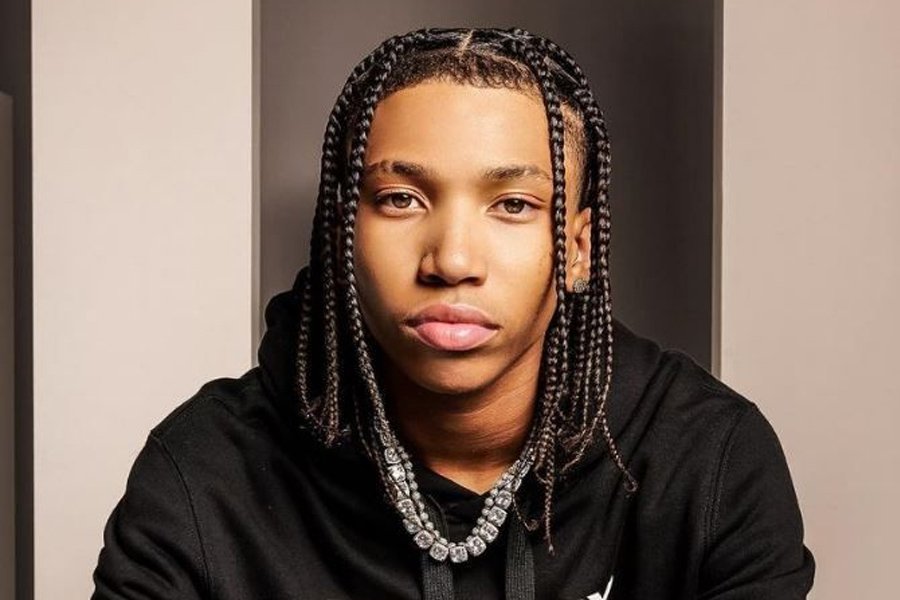
A Name Built From Family and Motion
I think some athletes arrive with a clear lane already painted for them, while others have to cut their own path through noise, expectation, and attention. Romelo Montez Hill feels like the second kind. His story carries the rhythm of a family name people recognize, yet his own identity keeps pointing toward the basketball floor. That balance gives his journey a special tension. It is part inheritance, part invention.
Romelo Montez Hill was born in Atlanta, a city that does not just host culture but seems to pulse with it. In that setting, it is easy for a young person to be pulled in several directions at once. Music, celebrity, sports, style, and public visibility all sit close together there. Yet what stands out about Romelo is how firmly his public image has leaned toward hoops. The court is where his voice sounds the clearest. The ball is his accent mark.
His middle name, Montez, adds another layer. It is more than a label. It feels like a bridge to family history, a thread that ties him to the people who shaped the world around him. In families where identity matters as much as achievement, names can work like small monuments. They remember. They honor. They keep the chain unbroken.
Growing Up Under Bright Lights Without Losing the Ground
I am always interested in how young athletes handle attention before they have even fully stepped into adulthood. Romelo Montez Hill grew up in a household where public life was never far away. That kind of upbringing can either distract a young person or sharpen him. In his case, the basketball path suggests focus. The lane stayed visible.
Family matters seem central to his story. His mother, Monica Denise Arnold, brought a strong artistic presence into his life, while his father, Rodney “Rocko” Hill Jr., added another public-facing legacy. That mix of influence can be a kind of wind tunnel. It presses on you from every direction. Still, pressure does not always crush. Sometimes it reveals the shape of the thing inside.
What makes Romelo’s background interesting is not just that he comes from a known family. It is how little his basketball identity appears to depend on that fame. He did not simply drift into the spotlight and stand there. He began building a separate lane with his own skill set. That separation matters. It shows intention. It shows work.
His family network appears to be broad, not just famous. Siblings, grandparents, and extended relatives form a circle that seems to matter in the everyday sense, not just the public one. That kind of support can be the hidden scaffolding behind a young athlete’s rise. People see the highlights, but the real structure is built in the background, one ride, one call, one conversation at a time.
A Guard’s Identity Is Often Written in Small Moments
Guard play is a study in detail. Big men can sometimes announce themselves with size alone, but guards have to earn attention in smaller ways. Footwork. Timing. Balance. Tempo. Romelo Montez Hill appears to live in those spaces. His profile suggests speed, quick hands, and a feel for pressure defense. That kind of game is not flashy in every possession, but it can change the shape of a contest the way a sharp gust can tilt a sail.
I like players who can affect a game without shouting through it. A guard who stays connected to the ball, who can defend at the point of attack, and who understands when to push and when to pause, has a kind of quiet authority. Romelo seems to be developing that kind of authority. His value is not just in scoring. It is in rhythm management, in disruption, in the ability to make the opponent uncomfortable.
There is something almost musical about that role. A good guard reads the beat of a game like a drummer listens to a room. He senses when the tempo needs to rise, when it should settle, when a single hard dribble can open a seam. That is the kind of craft that often matures in layers. It does not arrive all at once. It unfolds.
Overtime Elite as a Furnace for Growth
The move into Overtime Elite marks one of the most important chapters in Romelo Montez Hill’s development. I see OTE as more than a league. It is a furnace. It heats young talent under constant observation and asks for readiness before comfort arrives. For a guard, that environment can be unforgiving in the best possible way. Every practice has a purpose. Every game has an audience. Every mistake leaves a mark, and every good decision tends to echo.
Romelo’s place with RWE adds another dimension. Team identity matters in a setting like that. You are not just learning how to play. You are learning how to belong inside a system that wants pace, discipline, and resilience all at once. The daily demands of that type of development can sharpen habits faster than a looser environment would. It forces repetition. It rewards endurance.
That matters for a young player who already has a spotlight around him. Many prospects are visible because of hype. Fewer become interesting because of the shape of their growth. Romelo’s path feels like it is moving from promise toward definition. That is the real story. Not just that he is known, but that he is becoming more legible as a basketball player.
Recruiting Talk and the Weight of Possibility
Recruiting is strange because it turns potential into a public conversation before the final sentence has been written. For Romelo Montez Hill, that conversation has already started to widen. Interest from programs such as Hofstra, Jacksonville State, and Louisiana signals that coaches see enough in him to imagine a fit. That matters. Offers are not destiny, but they are evidence.
For a guard, the next step often depends on how well the player can translate traits into utility. Can he defend smaller spaces? Can he organize an offense? Can he make open shots under pressure? Can he survive the speed jump from one level to the next? These are the questions behind every recruiting message, even when they are never spoken aloud.
I think what makes Romelo’s position interesting is that his future is still open in several directions. He could continue to grow inside a professional development setting. He could step into a college path that gives him another stage and another set of tools. He could become one of those players who develops in public, where each season changes the conversation a little more. That uncertainty is not a flaw. It is the point.
Public Visibility, Social Media, and the Modern Athlete
No young athlete grows up in isolation now. The digital world makes everyone a broadcaster, and every highlight can become a calling card. Romelo Montez Hill’s online presence appears to reflect that reality without being swallowed by it. The basketball content leads. The work leads. The court remains the center of gravity.
That is important because social media can either become a mirror or a trap. In the best cases, it is a record of growth. A player shows the workouts, the clips, the gains, the daily grind. The audience sees the process rather than just the final product. Romelo’s public image seems to lean toward that healthier path. It lets the game speak first.
I also think there is value in restraint. Not every detail of a young athlete’s life needs to be on display. In fact, some of the strongest stories are built with a little space around them. That space allows mystery to survive. It keeps the focus on performance instead of noise.
The Family Factor Still Shapes the Narrative
Romelo Montez Hill’s story cannot be separated from family, but it also should not be reduced to family alone. That would flatten him. Family gives him context, not confinement. It explains the attention around him, but it does not explain his work. He still has to train. He still has to compete. He still has to convert expectation into production.
What I find most compelling is the way family history and athletic identity seem to run in parallel. One line carries heritage. The other carries ambition. Together they create tension, and tension is often where growth lives. When a young player learns to stand inside both legacy and individuality, he begins to develop a firmer sense of self. That seems to be part of Romelo’s arc.
In that sense, he is not merely a name attached to a famous household. He is a player learning how to become a presence on his own terms. That is a harder task than simply being recognized. It requires patience. It requires repetition. It requires the kind of focus that turns raw material into a real career.
FAQ
Who is Romelo Montez Hill?
Romelo Montez Hill is a young guard whose name has drawn attention because of both his family background and his basketball development. He is known for his work in the Overtime Elite environment and for the growing interest around his game.
What kind of player is Romelo Montez Hill?
He profiles as a quick guard with defensive instincts, pace control, and the ability to affect possessions in subtle ways. I see his game as built around energy, alertness, and the kind of timing that can shift momentum.
Why is his family background often mentioned?
His family is publicly recognized, so people often connect his name with his parents and extended relatives. That background adds visibility, but it also gives his story a deeper sense of lineage and context.
What makes his basketball path notable?
His development has taken place in a highly structured, competitive environment, which makes every step more visible. That kind of setting can speed up growth and sharpen a player’s habits in a way that traditional paths sometimes do not.
What does the recruiting interest suggest?
It suggests that college programs see potential worth monitoring. Recruiting interest is usually a signal that a player has traits coaches believe can translate to the next level with the right development.
Is Romelo Montez Hill known for music or entertainment work?
His public identity appears centered on basketball rather than music or entertainment. Even with a famous family around him, his own spotlight has followed the game.
What is the main theme of his story so far?
For me, the main theme is becoming. Romelo Montez Hill is a young athlete still writing his shape, still gathering momentum, still learning how to turn visibility into substance.