A name that arrives with history attached
I keep coming back to the name John Joseph Sargent Shriver because it does not sound accidental. It sounds chosen with intent, as if every syllable was set down carefully, like stones in a path that leads backward through time. In families where lineage matters, a name can be a compass, a badge, and a promise all at once. John Joseph Sargent Shriver carries all three.
What makes him interesting to me is not a public career or a carefully managed image. It is the opposite. He stands near the center of a famous family while remaining outside the usual glare that follows celebrity children. That tension gives his story texture. He is known less for what he has done in public and more for what surrounds him: a family defined by service, advocacy, philanthropy, and recurring civic visibility. In that sense, he feels like a figure seen through frosted glass. The outline is clear, but the details are still his own to write.
A childhood inside an inherited tradition
When I look at John Joseph Sargent Shriver, I see a child growing up in a house where public service is not a slogan. It is a household language. Some families pass down heirlooms. Others pass down professions. His family appears to pass down a moral vocabulary. Inclusion, duty, charity, leadership, and public responsibility seem to have been spoken often enough around him to become part of the air.
That matters because children absorb more than rules. They absorb rhythm. They learn what gets praised, what gets noticed, and what kind of life is considered meaningful. If a family’s center of gravity is service, then a child raised within it learns that status is less important than usefulness. Praise is less important than participation. Being seen matters less than being helpful.
For John, this means his identity is likely shaped by a strong sense of inherited expectation. That can be a gift. It can also feel like a lantern held too close. A family legacy can illuminate a road, but it can also make it hard to see where the road belongs to you alone.
The Shriver and Kennedy influence as a living atmosphere
The family name carries weight because it sits at the intersection of two powerful traditions. One is the Kennedy story, long associated with politics, public life, and national memory. The other is the Shriver story, strongly tied to advocacy and institution building. Put together, they create a kind of public halo, but one rooted in work rather than mere prestige.
That distinction matters. A legacy built only on reputation fades quickly. A legacy built on organizations, causes, and people’s lives continues to breathe. John Joseph Sargent Shriver is the descendant of that kind of legacy. He is linked not just to prominent names, but to a family habit of turning conviction into structure.
I think that is why his family history feels so durable. It is not a museum display. It is a working engine. Best Buddies, the Peace Corps, the Special Olympics, and related civic efforts are not decorative footnotes. They are the machinery of a family identity that has always reached outward. For John, that means the past is not distant. It is active. It presses gently on the present like roots beneath soil.
Privacy as a form of identity
One of the most telling features of John Joseph Sargent Shriver’s public profile is how little of it is truly public. In an age when many people are encouraged to perform themselves constantly, privacy becomes its own kind of statement. It can suggest youth, caution, family protection, or simply a refusal to be turned into content.
I find that restraint revealing. A famous family can easily turn a child into a symbol before that child has formed an adult self. Yet John’s story, at least in the public record described here, remains mostly quiet. That quiet is not emptiness. It is space. And space matters.
A child can grow in the shade of towering trees without becoming the trunk, the branch, or the leaf that everyone else expects. He can inherit a story without being trapped inside it. That is what makes his privacy feel meaningful rather than incidental. It gives him the dignity of incompletion.
The family network around him
John’s siblings and parents form a small constellation, and I think that image works better than the usual language of pedigree. A constellation does not erase the individuality of each star. It connects them. It creates pattern without flattening difference.
His father, Anthony Shriver, is associated with Best Buddies, an organization that has made inclusion feel practical rather than abstract. His mother, Alina Mojica Shriver, brings a different kind of elegance to the family story through her background as a ballerina. That contrast between social mission and artistic discipline gives the family atmosphere a layered quality. One side feels rooted in activism and institution building. The other carries form, grace, and performance.
The siblings widen that circle. Older brothers and sisters, including Teddy, Eunice Julia, Francesca Maria, and Carolina, each help shape the world John inhabits. Their presence means his childhood is not solitary. It is relational, crowded in the best sense. A big family can be noisy, but it can also be protective. It can create a buffer between a child and the full force of public attention. It can also teach endurance, compromise, and shared memory.
I suspect that in a family like this, identity is never purely individual. It is braided. One strand is personal. Another is familial. Another is historical. John’s life seems to sit inside that braid.
What his name says without speaking
Names are often treated as labels, but in families like this they function more like bookmarks in a long book. John Joseph Sargent Shriver sounds deliberate enough to carry memory. It has the formality of tradition and the gravity of inheritance. It does not float. It anchors.
The middle names matter, too. They suggest continuity, connection, and respect for lineage. A name like this tells a story before the person has a chance to do so. It links him to ancestors whose reputations already occupy public memory. That can be a source of pride, but it can also be a kind of anticipation. People hear the name and expect a chapter to follow.
I think that is one of the most fascinating parts of his identity. The name arrives ahead of the man. It opens doors, but it also sets a table where history is already seated.
Public events and private growth
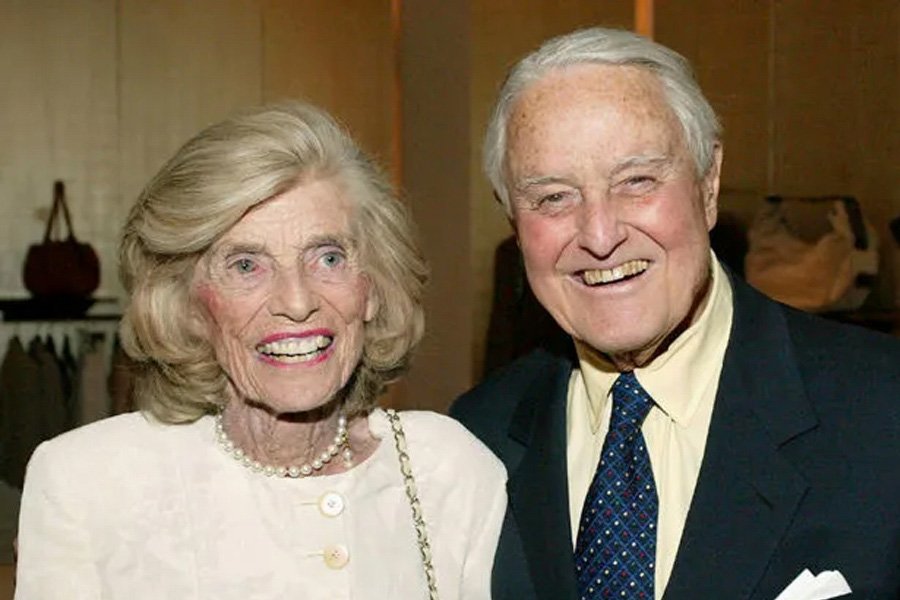
The public glimpses of John Joseph Sargent Shriver that appear in family and charity settings are important not because they reveal everything, but because they reveal a style of upbringing. They suggest a life near philanthropic activity, near high-profile family gatherings, and near institutions that matter to the family story. He does not seem to be positioned as a standalone public personality. Instead, he appears as someone being raised within a culture of civic presence.
That distinction shapes how I read his story. Being seen at events is not the same as choosing a public life. For a child, it may simply be part of the environment, like attending school assemblies or family dinners. Yet in a prominent family, those ordinary moments become visible to outsiders. A snapshot can look like a statement when it was really just a Tuesday.
This is why I hesitate to read too much into the fragments. Still, fragments matter. They show the temperature of a life. They show that John’s world is not detached from service or ceremony. It is already in contact with both.
Why his story still matters even without a career
Some biographies are built on accomplishment. Others are built on proximity to significance. John Joseph Sargent Shriver belongs to the second category for now, and that does not make his story smaller. It makes it more human. Not everyone begins with a public platform. Some begin with a legacy that will take years to accept, reshape, or resist.
I find that transition compelling. Children of famous families often face a hidden question: what do I inherit, and what do I refuse? That question can define decades. It can appear in education, work, relationships, and even in the way a person introduces themselves. For John, the answer is still unwritten. That open space is part of the story.
There is also something refreshing about a biography that refuses to pretend certainty where there is none. It is tempting to project a future onto a child of privilege or pedigree. But projection is not knowledge. The more honest approach is to notice the frame, the setting, and the inherited materials, then leave room for the actual person to emerge.
FAQ
Who is John Joseph Sargent Shriver?
John Joseph Sargent Shriver is the youngest child of Anthony Shriver and Alina Mojica Shriver. He belongs to the Kennedy and Shriver family line, which is widely associated with public service, philanthropy, and disability advocacy.
Why is his name significant?
His name carries family memory. It links him to the Shriver tradition and gives him a formal, layered identity that feels tied to heritage rather than fashion.
What kind of family was he born into?
He was born into a family known for public service, nonprofit leadership, and strong ties to major American civic history. That environment shapes how the public understands him, even though he remains largely private.
Does he have a public career?
There is no clear public record of an independent career for him. Most of the available public attention focuses on his family background and occasional appearances with relatives.
What makes his family different from other prominent families?
What stands out to me is the way the family has connected prominence with mission. Their name is tied not just to influence, but to institutions and causes that have had lasting social impact.
Why does his privacy matter?
His privacy matters because it leaves room for a real person to exist apart from the family myth. In a family that often appears in public, quiet can be a form of protection and individuality.
What is the most important thing to understand about him?
The most important thing is that John Joseph Sargent Shriver represents a life still unfolding inside a powerful inherited story. He is not only a name in a family tree. He is also a person growing inside that tree, with his own shape still taking form.
How To Choose A Parking Garage Without Losing Your Mind
How To Turn A Sports Room Into A Personal Hall Of Fame
Building An Arizona Home That Outsmarts The Sun